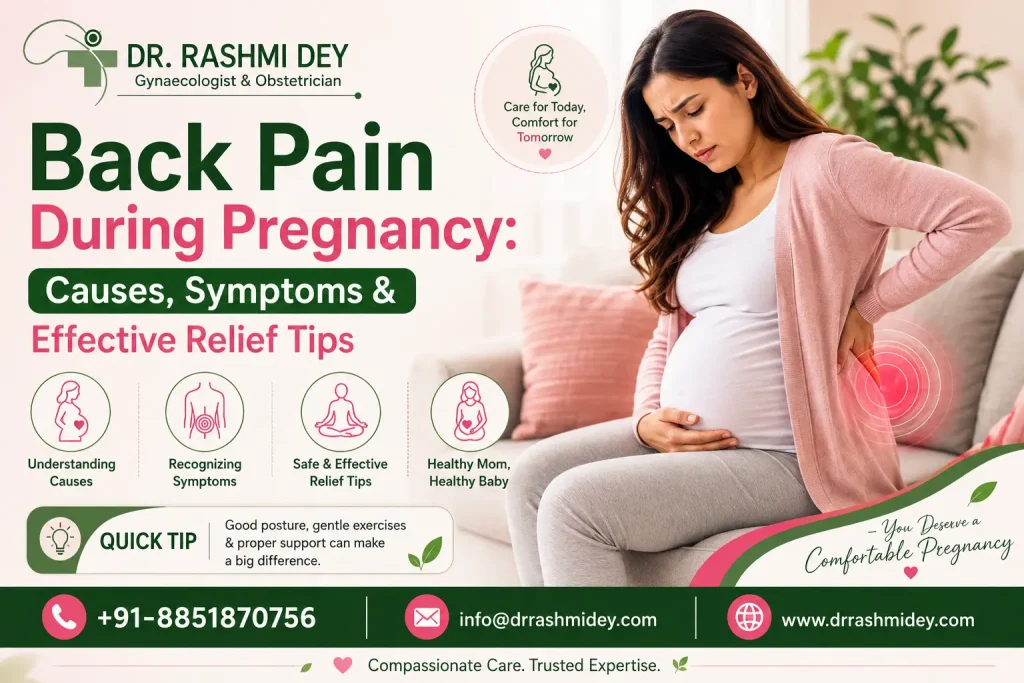
Back Pain During Pregnancy: Causes, Symptoms & Effective Relief Tips
Pregnancy brings many physical changes as the body adapts to support the growing baby. One of the most common concerns during this time is back pain during pregnancy. Discomfort may range from mild aching to persistent pain that affects sleep, movement, and daily activities.
Back pain can occur at different stages of pregnancy and may have different causes depending on the trimester. Lower back pain during pregnancy is particularly common, while some women may also experience discomfort around the upper back and shoulders. Understanding why pregnancy-related back pain occurs and knowing safe ways to manage it can make the pregnancy journey more comfortable.
Important: Severe, sudden, or unusual pain during pregnancy should not be self-treated. A qualified obstetrician or gynaecologist can help determine whether the pain is a normal pregnancy-related change or requires further evaluation.
What Causes Back Pain During Pregnancy?
Several physical and hormonal changes can contribute to back discomfort during pregnancy.
1. Hormonal Changes
During pregnancy, hormones help prepare the body for childbirth by relaxing ligaments and joints. This can reduce stability around the pelvis and lower spine, sometimes contributing to back discomfort.
2. Growing Uterus and Baby
As the uterus grows, the body’s centre of gravity gradually shifts forward. To maintain balance, a pregnant woman may unconsciously change her posture, which can place additional strain on the lower back.
3. Increased Body Weight
Pregnancy naturally adds weight to the body. The back, hips and legs may need to work harder to support this additional load, potentially increasing muscular fatigue and discomfort.
4. Posture and Daily Activities
Standing for long periods, sitting incorrectly, lifting heavy objects or sleeping in an uncomfortable position can aggravate pregnancy-related back pain.
5. Muscle and Ligament Strain
As the abdomen expands, abdominal muscles may stretch and become less effective at supporting the spine. This can increase the workload on the back muscles.

Lower Back Pain During Pregnancy
Lower back pain during pregnancy is particularly common because the lower spine and pelvis experience increased mechanical stress as pregnancy progresses.
The discomfort may feel like:
- A dull or aching sensation
- Stiffness after sitting or standing
- Pain while walking or changing positions
- Discomfort when getting out of bed
- Pain that becomes worse after prolonged activity
Maintaining good posture, taking regular breaks and using pregnancy-safe physical activity may help reduce mild discomfort.
Upper Back Pain During Pregnancy
Although lower back discomfort is more frequently discussed, upper back pain during pregnancy can also occur.
It may be associated with:
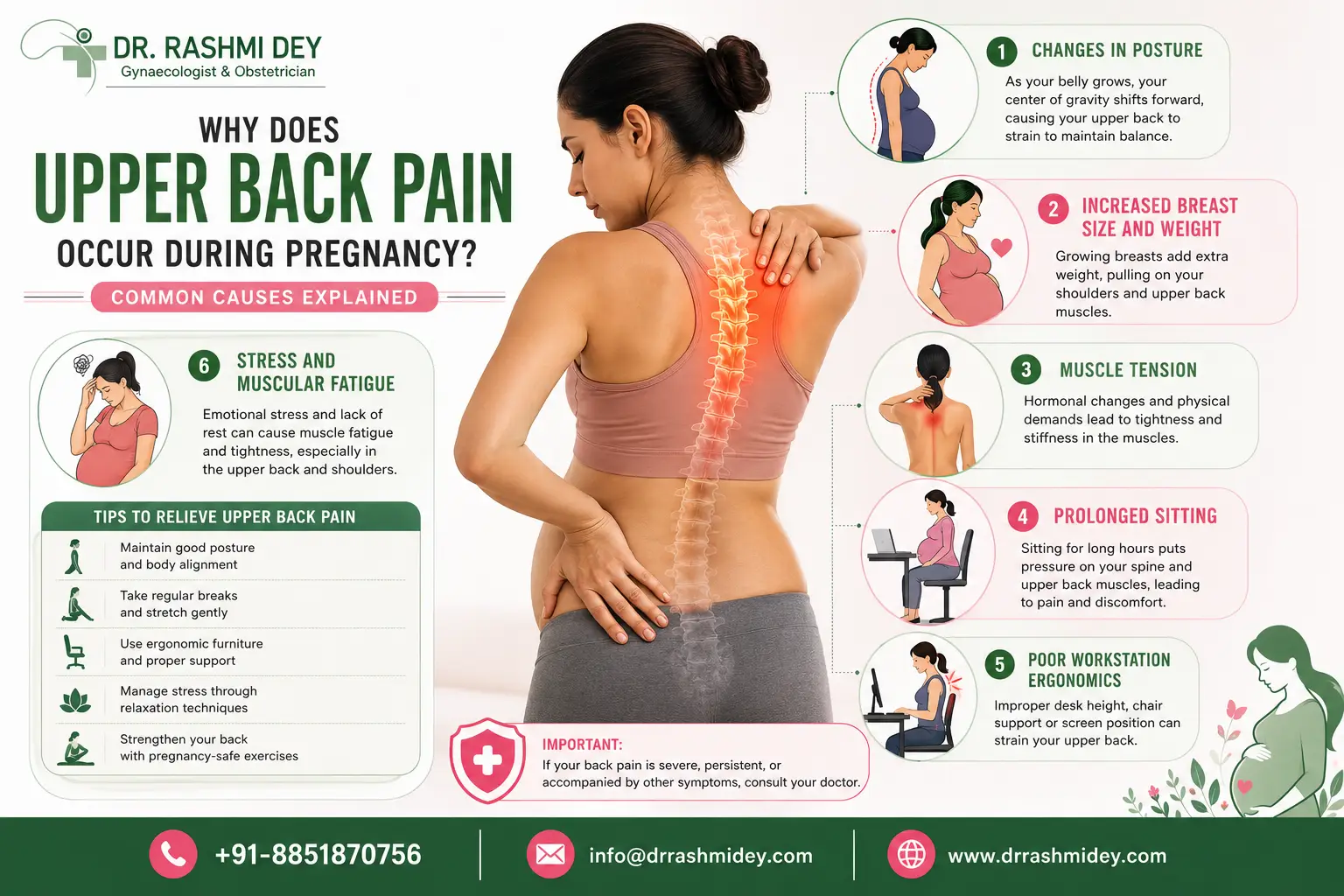
Gentle stretching, appropriate posture and comfortable support while sitting may help. If upper back pain is persistent, severe, or accompanied by other concerning symptoms, medical assessment is advisable.
Back Pain During Pregnancy in the First Trimester
Back pain during pregnancy first trimester can occur even before the abdomen becomes noticeably larger.
Early pregnancy involves significant hormonal changes, and the ligaments around the pelvis begin adapting to support the pregnancy. Fatigue, changes in activity and posture can also contribute to discomfort.
However, back pain in early pregnancy should not automatically be assumed to be a normal pregnancy symptom. If pain is severe, persistent, one-sided, or accompanied by bleeding, fever, painful urination, dizziness, abdominal pain or other concerning symptoms, consult a healthcare professional promptly.
How Can You Relieve Back Pain During Pregnancy?
For mild pregnancy-related back discomfort, several practical measures may help:
Maintain Good Posture
Keep your shoulders relaxed and avoid slouching. When standing, distribute your weight evenly rather than leaning to one side.
Avoid Heavy Lifting
Avoid lifting heavy objects whenever possible. If you need to pick something up, bend your knees and keep the object close to your body rather than bending from your waist.
Stay Physically Active
Pregnancy-appropriate activities, when approved by your healthcare provider, can help maintain muscle strength and flexibility. Walking and gentle pregnancy exercises may be suitable for many women.
Use Comfortable Support
A supportive chair, appropriate footwear and pregnancy pillows can help improve comfort. When sleeping, many pregnant women find side sleeping with a pillow between the knees more comfortable.
Take Regular Breaks
If your routine involves prolonged sitting or standing, change positions regularly and take short breaks to reduce muscular strain.
Try Gentle Heat
A comfortably warm—not excessively hot—application may help relax tense muscles. Avoid excessive heat exposure during pregnancy, and discuss safe use with your healthcare provider if you are unsure.
When Should You Contact a Doctor About Pregnancy Back Pain?
Not every episode of back pain is dangerous, but certain symptoms deserve prompt medical attention.
Contact your healthcare provider if back pain is:
- Severe or worsening
- Sudden or unusual
- Persistent despite rest
- Associated with vaginal bleeding
- Accompanied by fever or chills
- Associated with painful urination
- Accompanied by significant abdominal or pelvic pain
- Associated with regular contractions or pressure
- Accompanied by weakness, numbness or difficulty walking
During pregnancy, it is better to have unexplained or significant symptoms evaluated rather than assuming they are simply part of pregnancy.
Frequently Asked Questions
Is back pain normal during pregnancy?
Mild back discomfort is common during pregnancy because of hormonal, postural and physical changes. However, severe or unusual pain should be discussed with a healthcare professional.
Is lower back pain common in early pregnancy?
Yes, some women experience lower back discomfort during the first trimester. Hormonal changes and changes around the pelvis can contribute to it.
Why does my upper back hurt during pregnancy?
Upper back pain may be related to posture, muscle tension, changes in breast size and prolonged sitting or standing.
What is the safest way to relieve pregnancy back pain?
Maintaining good posture, avoiding heavy lifting, taking regular breaks and doing pregnancy-appropriate exercises recommended by your healthcare provider may help.
When is pregnancy back pain a warning sign?
Severe or persistent pain, especially when accompanied by bleeding, fever, urinary symptoms, abdominal pain, contractions, weakness or numbness, requires medical evaluation.
Conclusion
Back pain during pregnancy is common and can result from hormonal changes, increasing body weight, postural adjustments and the physical demands of supporting a growing baby. Whether you experience lower back pain during pregnancy, upper back pain during pregnancy, or discomfort during the first trimester, identifying the possible cause can help you choose appropriate ways to manage it.
Simple measures such as maintaining proper posture, staying appropriately active, avoiding heavy lifting and taking regular breaks may provide relief. However, persistent or severe pain should always be evaluated by a qualified healthcare professional.
Gynaecologist And Obstetrician In Gaur City 2 | Dr Rashmi Dey
For pregnancy-related concerns and personalized obstetric care, Dr. Rashmi Dey provides gynaecology and pregnancy care in Gaur City 2, with services covering pregnancy care, birth support and women’s health. Her clinic is located at Mahagun Mywoods Mart, Gaur City 2, Ghaziabad.
Related content
Vaccination in Pregnancy Guide
Pregnancy Tips for First-Time Mothers
9 Months Pregnant Symptoms & Delivery Signs
Women Wellness Clinic in Gaur City 2