9th Month Pregnancy Pain: How to Identify Labor Signs
The 9th month of pregnancy is a time of excitement, anticipation, and significant physical changes. As your due date approaches, your baby continues to grow and gradually moves into the pelvis in preparation for birth. These natural changes can lead to various aches and discomforts, making many expectant mothers wonder whether what they’re feeling is a normal part of pregnancy or a sign that labor is about to begin. Experiencing discomfort during the final weeks of pregnancy is common. Some women notice mild backaches, while others experience pelvic pressure, abdominal discomfort, or leg cramps. Understanding these changes can help you stay calm and know when it’s time to contact your healthcare provider. If you’re experiencing 9th month pregnancy pain, knowing the difference between normal pregnancy discomfort and true labor signs is essential for ensuring the safety of both you and your baby.
Also Read: 9 Months Pregnant Symptoms
What Causes Pain During the 9th Month of Pregnancy?
During the last month of pregnancy, your body prepares for childbirth in several ways. Hormones soften the ligaments around your pelvis, your uterus reaches its largest size, and your baby’s head often moves lower into the birth canal. These changes place additional pressure on your muscles, joints, nerves, and internal organs.
Some of the most common reasons for pain during this stage include:
- The baby’s increasing weight
- Pressure on the pelvis and lower back
- Stretching of abdominal muscles
- Hormonal changes that loosen joints
- Braxton Hicks (practice) contractions
- Fluid retention and swelling
- Muscle fatigue and reduced mobility
Most of these discomforts are temporary and improve after delivery.
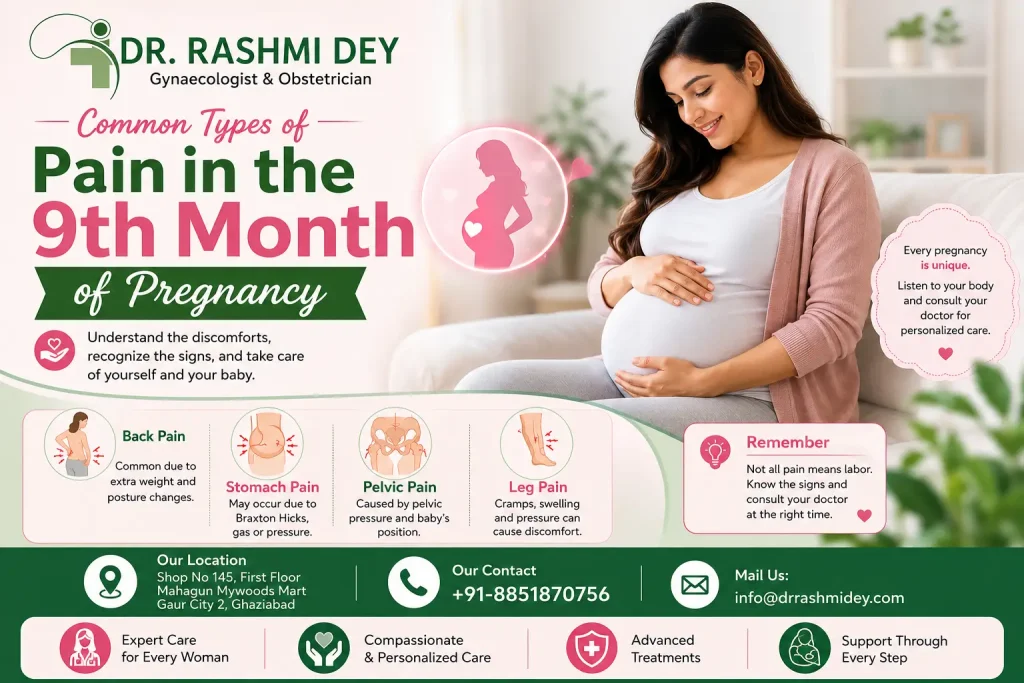
Common Types of Pain in the 9th Month of Pregnancy
Every pregnancy is different, but several types of pain are especially common during the final weeks.
Back Pain During the 9th Month of Pregnancy
Lower back discomfort is one of the most frequently reported symptoms during late pregnancy. As your baby grows, your posture naturally shifts, placing additional strain on the muscles supporting your spine.
Common reasons include:
- Extra body weight
- Change in posture
- Relaxation of pelvic ligaments
- Baby’s position pressing on the lower back
- Standing or sitting for long periods
How to Manage Back Pain
You may find relief by:
- Maintaining proper posture while sitting and standing
- Sleeping on your left side with a pillow between your knees
- Wearing supportive footwear
- Avoiding heavy lifting
- Taking short walks if advised by your doctor
- Performing gentle prenatal stretching under medical guidance
If back pain becomes severe, occurs with regular contractions, or is accompanied by fluid leakage or bleeding, seek immediate medical attention.
Stomach Pain in the 9th Month of Pregnancy
Mild abdominal discomfort is usually a normal part of late pregnancy. As the uterus expands and your baby moves lower into the pelvis, you may notice pressure, tightening, or occasional cramps.
Possible causes include:
- Braxton Hicks contractions
- Baby’s movements
- Stretching of abdominal muscles
- Gas or constipation
- Pressure on nearby organs
Braxton Hicks contractions are often irregular and usually improve with rest or hydration. True labor contractions, however, become stronger, longer, and closer together over time.
If stomach pain is severe, persistent, or associated with fever, heavy bleeding, or reduced fetal movements, immediate medical evaluation is necessary.
Pelvic Pain During the 9th Month of Pregnancy
As delivery approaches, many women experience increased pelvic pressure. This often happens because the baby’s head settles lower into the pelvis, a process known as “lightening.”
You may experience:
- Pressure between the legs
- Pain while walking
- Difficulty turning in bed
- Pain around the pubic bone
- Discomfort after standing for long periods
Tips to Reduce Pelvic Discomfort
- Avoid sudden twisting movements.
- Change positions slowly.
- Rest whenever possible.
- Use a pregnancy support belt if recommended.
- Sleep with a pillow between your legs.
- Follow your doctor’s advice regarding gentle pelvic exercises.
Although pelvic pressure is usually normal, severe pain that prevents walking or is associated with vaginal bleeding should be evaluated promptly.
Leg Pain During the 9th Month of Pregnancy
Leg discomfort is another common complaint during late pregnancy. It may present as muscle cramps, heaviness, or aching, particularly at night.
Contributing factors include:
- Pressure on nerves
- Poor circulation
- Muscle fatigue
- Swelling in the lower limbs
- Mineral deficiencies in some cases
Ways to Ease Leg Pain
- Stretch your calf muscles before bedtime.
- Stay well hydrated.
- Elevate your legs while resting.
- Wear comfortable, supportive footwear.
- Walk for short periods if approved by your healthcare provider.
- Avoid sitting or standing in one position for too long.
Persistent swelling in one leg, especially if accompanied by redness or severe pain, should be evaluated immediately.
How to Tell the Difference Between Pregnancy Pain and Labor Pain
One of the biggest concerns during the final weeks is knowing whether discomfort signals the start of labor.
Normal Pregnancy Discomfort
Normal pregnancy pain is often mild, irregular, and changes with movement or rest. It usually improves after changing positions, drinking water, or relaxing.
Examples include:
- Mild lower back ache
- Occasional abdominal tightening
- Pelvic pressure
- Baby’s movements
- Leg cramps
True Labor Pain
Labor contractions follow a clear pattern and become progressively stronger.
Signs include:
- Regular contractions that become closer together
- Pain that starts in the back and moves to the abdomen
- Increasing intensity over time
- Contractions that continue despite walking or resting
- Water breaking
- Bloody mucus discharge (bloody show)
If these symptoms occur, contact your gynecologist or visit your hospital without delay.
When Should You Contact Your Doctor Immediately?
While mild discomfort is expected during the final month of pregnancy, some symptoms require immediate medical attention. Contact your gynecologist or visit the nearest hospital if you experience:
- Regular contractions every 5–10 minutes before reaching the hospital
- A sudden gush or continuous leakage of fluid (water breaking)
- Heavy vaginal bleeding
- Severe abdominal pain that does not improve with rest
- Reduced or no fetal movements
- Persistent, severe headache or blurred vision
- High fever or chills
- Swelling of the face, hands, or feet accompanied by high blood pressure
Early medical evaluation can help prevent complications and ensure the well-being of both mother and baby.
False Labor vs True Labor: How to Tell the Difference
| False Labor (Braxton Hicks) | True Labor |
|---|---|
| Contractions are irregular | Contractions occur at regular intervals |
| Pain usually eases with rest | Pain continues even after resting |
| Mild tightening in the abdomen | Pain becomes stronger and more frequent |
| No significant cervical changes | Cervix gradually dilates and effaces |
| Walking may reduce discomfort | Walking often makes contractions stronger |
If you’re unsure whether you’re in labor, don’t hesitate to contact your healthcare provider for guidance.
How to Manage Pain During the 9th Month of Pregnancy
Although some discomfort is unavoidable, simple lifestyle measures can help you feel more comfortable during the final weeks.
Stay Active
Gentle walking and pregnancy-safe exercises, as recommended by your doctor, improve circulation and reduce stiffness.
Maintain Good Posture
Avoid slouching while sitting or standing. Using a supportive chair and keeping your shoulders relaxed can reduce strain on your back.
Sleep Comfortably
Sleeping on your left side with pillows supporting your back and between your knees can help relieve pressure on your spine and pelvis.
Stay Hydrated
Drinking enough water throughout the day may help reduce muscle cramps and support healthy circulation.
Practice Relaxation Techniques
Deep breathing, meditation, and prenatal yoga (under professional supervision) may help reduce stress and muscle tension.
Attend Regular Prenatal Check-ups
Routine antenatal visits allow your doctor to monitor your baby’s growth, identify any concerns early, and prepare you for a safe delivery.
Foods That May Help Reduce Pregnancy Discomfort
A balanced diet plays an important role in supporting your health during late pregnancy.
Include foods rich in:
- Calcium: Milk, yogurt, paneer
- Protein: Eggs, lentils, beans, lean chicken, fish
- Iron: Spinach, legumes, dates
- Potassium: Bananas, coconut water
- Magnesium: Almonds, pumpkin seeds, peanuts
- Fiber: Whole grains, fruits, vegetables
Eating smaller, frequent meals can also help reduce bloating and improve digestion.
Always follow your gynecologist’s dietary advice based on your individual health needs.
Simple Tips to Prepare for Labor
As your due date approaches, being prepared can help reduce anxiety and make the transition to labor smoother.
- Pack your hospital bag in advance.
- Keep all medical reports and prescriptions together.
- Save emergency contact numbers.
- Arrange transportation to the hospital.
- Learn breathing techniques for labor.
- Monitor your baby’s movements daily.
- Discuss your birth plan with your gynecologist.
- Know the location of your maternity hospital and the quickest route.
Being prepared allows you to focus on welcoming your baby with confidence.
Conclusion
The final month of pregnancy is filled with exciting changes as your body prepares for childbirth. While backaches, pelvic pressure, abdominal discomfort, and leg cramps are common, understanding what’s normal and recognizing the signs of labor can help you make informed decisions.
Most pregnancy-related discomfort improves after delivery, but persistent or severe pain should never be ignored. Regular antenatal check-ups, a healthy lifestyle, and timely medical guidance play a key role in ensuring a safe pregnancy and delivery.
If you’re looking for compassionate and comprehensive pregnancy care in Gaur City 2, Greater Noida West, Noida Extension, or nearby areas, consult Dr. Rashmi Dey. Personalized prenatal care and timely medical support can help you enjoy a healthier pregnancy and prepare confidently for childbirth.
Frequently Asked Questions
1. How to overcome pain during the 9th month of pregnancy?
You can reduce discomfort by getting enough rest, staying hydrated, maintaining good posture, performing doctor-approved prenatal exercises, using supportive pillows while sleeping, and attending regular prenatal check-ups. Always consult your gynecologist before trying new exercises or medications.
2. Is body pain normal during the 9th month of pregnancy?
Yes. Mild body pain is common during the final month because of hormonal changes, increased baby weight, and your body’s preparation for labor. However, severe or persistent pain should be evaluated by a healthcare professional.
3. Which food is taken for pains in the 9th month of pregnancy?
A nutritious diet rich in calcium, magnesium, protein, potassium, and iron may support muscle health and help reduce cramps. Include dairy products, leafy vegetables, bananas, nuts, seeds, lentils, fruits, and plenty of fluids in your daily diet.
4. Why does abdominal pain occur in the 9th month of pregnancy?
Abdominal discomfort during the last month can result from Braxton Hicks contractions, stretching of abdominal muscles, baby’s movements, gas, constipation, or the beginning of labor. If pain is severe or accompanied by bleeding, fever, or reduced fetal movement, seek immediate medical care.
5. Why does the body pain more during the 9th month of pregnancy?
As delivery approaches, your baby’s growth, hormonal changes, loosening of pelvic ligaments, and increased pressure on muscles and joints can all contribute to body pain. These changes help prepare your body for labor and childbirth.