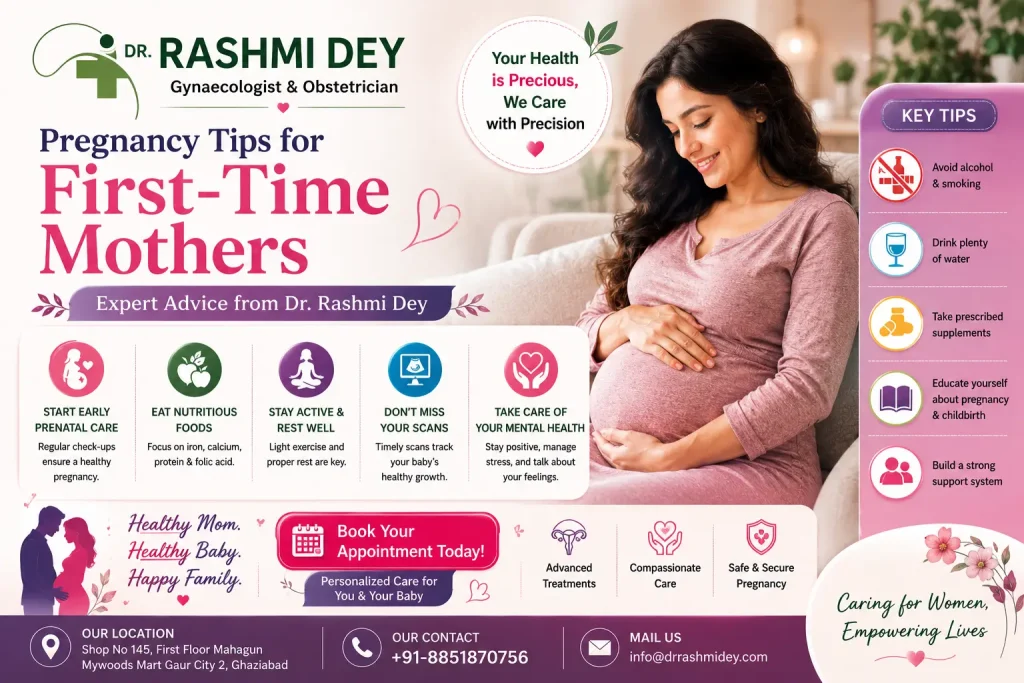
Pregnancy Tips for First-Time Mothers: Expert Advice from Dr. Rashmi Dey
Discovering that you are pregnant for the first time is a life-changing moment. Along with excitement and happiness, many women experience uncertainty and countless questions. What foods should you eat? How often should you visit a doctor? Which symptoms are normal, and which require medical attention?
The good news is that with proper prenatal care, healthy lifestyle habits, and expert guidance from an experienced gynaecologist, you can enjoy a healthy and comfortable pregnancy journey.
According to Dr. Rashmi Dey, an experienced Gynaecologist and Obstetrician in Gaur City 2, Greater Noida West, early prenatal care and regular monitoring play a crucial role in ensuring the health of both mother and baby.
Quick Answer: Essential Pregnancy Tips for First-Time Mothers
If you are pregnant for the first time, remember these key tips:
- Schedule your first prenatal appointment as soon as your pregnancy is confirmed.
- Take folic acid and prescribed prenatal supplements.
- Eat a balanced diet rich in iron, calcium, and protein.
- Stay physically active with doctor-approved exercises.
- Attend all pregnancy scans and check-ups.
- Get adequate sleep and manage stress.
- Avoid smoking, alcohol, and processed foods.
- Contact your doctor if you notice any unusual symptoms.
Following these simple steps can significantly improve pregnancy outcomes and help you prepare for motherhood with confidence.
Why Early Prenatal Care Is Important
One of the most important pregnancy tips for first-time mothers is to start prenatal care as early as possible.
Many women wait until they begin experiencing symptoms, but doctors recommend scheduling your first prenatal appointment immediately after receiving a positive pregnancy test.
Early prenatal care helps:
- Confirm the pregnancy
- Determine the due date
- Detect underlying health conditions
- Monitor fetal development
- Reduce pregnancy-related complications
Women with conditions such as thyroid disorders, diabetes, PCOS, or high blood pressure may require additional monitoring throughout pregnancy.
Nutrition During Pregnancy: What Should You Eat?
A healthy pregnancy begins with proper nutrition. Your baby depends entirely on you for essential nutrients required for growth and development.
Important Nutrients During Pregnancy
Folic Acid
Folic acid helps prevent neural tube defects and supports healthy brain development.
Sources include:
- Leafy green vegetables
- Citrus fruits
- Fortified cereals
- Supplements prescribed by your doctor
Iron
Iron helps prevent anemia and supports increased blood production during pregnancy.
Sources include:
- Spinach
- Lentils
- Rajma
- Beans
- Lean meats
Calcium
Calcium supports healthy bones and teeth for both mother and baby.
Sources include:
- Milk
- Yogurt
- Paneer
- Almonds
Protein
Protein is essential for fetal growth, tissue development, muscle formation, and overall baby development during pregnancy. It also helps support the mother’s changing body and increased nutritional needs.
Protein-rich foods include:
- Eggs
- Dairy products (milk, yogurt, paneer)
- Lentils (dal)
- Chickpeas (chana)
- Kidney beans (rajma)
- Soybeans and soy products
- Tofu
- Quinoa
- Nuts and seeds (almonds, peanuts, chia seeds, pumpkin seeds)
- Fish
- Chicken
Vegetarian mothers can easily meet their protein requirements by including a variety of pulses, legumes, dairy products, soy-based foods, nuts, and seeds in their daily diet.
Foods to Avoid During Pregnancy
To protect your baby’s health, avoid:
- Raw or undercooked meat
- Raw eggs
- Unpasteurized dairy products
- Excessive caffeine
- Alcohol
- Smoking
- Highly processed foods
How Much Weight Gain Is Normal?
Weight gain during pregnancy varies depending on your pre-pregnancy body weight.
Generally:
- Women with a healthy BMI should gain approximately 11–16 kg.
- Underweight women may need to gain more.
- Overweight women may be advised to gain less.
Your gynaecologist will monitor your weight throughout pregnancy and provide personalized recommendations.
Stay Active During Pregnancy
Physical activity offers several benefits during pregnancy.
Benefits include:
- Improved blood circulation
- Reduced back pain
- Better sleep quality
- Controlled weight gain
- Improved mood
- Easier labor and recovery
Safe pregnancy exercises include:
- Walking
- Prenatal yoga
- Light stretching
- Swimming
Always consult your doctor before beginning any exercise program.
Common Pregnancy Symptoms
Many symptoms are completely normal during pregnancy.
These include:
- Morning sickness
- Fatigue
- Mood swings
- Frequent urination
- Breast tenderness
- Mild cramping
While these symptoms are generally harmless, some signs should never be ignored.
When Should You Contact Your Doctor Immediately?
Seek immediate medical attention if you experience:
- Heavy vaginal bleeding
- Severe abdominal pain
- Persistent vomiting
- High fever
- Severe headaches
- Blurred vision
- Sudden swelling of hands or face
- Leakage of fluid
- Reduced fetal movements
Prompt medical care can help prevent serious complications.
Important Pregnancy Scans and Check-Ups
Regular pregnancy scans help monitor your baby’s development and identify potential concerns early.
Dating Scan
Usually performed during early pregnancy to confirm gestational age.
NT Scan
Conducted during the first trimester to assess the risk of chromosomal abnormalities.
Anomaly Scan
Performed between 18 and 22 weeks to examine fetal anatomy.
Growth Scan
Conducted during the third trimester to monitor fetal growth and well-being.
Never skip scheduled scans, even if your pregnancy appears healthy.
Emotional Health During Pregnancy
Pregnancy affects both physical and emotional well-being.
Many first-time mothers experience:
- Anxiety
- Mood changes
- Fear of labor
- Sleep disturbances
Simple ways to support emotional health include:
- Getting enough rest
- Practicing meditation
- Deep breathing exercises
- Talking openly with loved ones
- Joining pregnancy support groups
If you experience persistent sadness or anxiety, consult your doctor for professional guidance.
Preparing for Labor and Delivery
As your due date approaches, begin preparing for childbirth.
Important steps include:
- Choosing your delivery hospital
- Packing a hospital bag
- Creating a birth plan
- Arranging transportation
- Attending prenatal classes
Preparation helps reduce stress and boosts confidence before delivery.
Why Choosing the Right Gynaecologist Matters
The right medical support can make a significant difference throughout your pregnancy journey.
An experienced gynaecologist helps:
- Monitor your health
- Track fetal development
- Manage high-risk pregnancies
- Guide you through labor and delivery
- Provide postnatal care
Women seeking pregnancy care in Gaur City 2 and Greater Noida West should choose a trusted specialist who offers personalized support at every stage of pregnancy.
Conclusion
Pregnancy is a beautiful and transformative experience. While it comes with challenges, proper medical care, healthy habits, and emotional support can make the journey smoother and more enjoyable.
If you are expecting your first baby, focus on regular prenatal care, nutritious eating, physical activity, and open communication with your healthcare provider.
For expert pregnancy care, prenatal guidance, and comprehensive women’s healthcare services in Gaur City 2 and Greater Noida West, consult Dr. Rashmi Dey and take the first step toward a healthy pregnancy journey.
Frequently Asked Questions
1. When should I visit a gynaecologist after a positive pregnancy test?
You should schedule your first prenatal appointment within 6 to 8 weeks of pregnancy confirmation.
2. How much water should a pregnant woman drink daily?
Most pregnant women should drink 8 to 12 glasses of water daily, depending on individual needs.
3. Can I travel during pregnancy?
In most uncomplicated pregnancies, travel is generally safe during the second trimester. Always consult your doctor first.
4. Which sleeping position is best during pregnancy?
Sleeping on the left side is generally recommended because it improves blood flow to the baby.
5. Is coffee safe during pregnancy?
Moderate caffeine consumption is generally considered safe, but intake should remain within your doctor’s recommendations.
6. Can I exercise during pregnancy?
Yes. Walking, prenatal yoga, and light stretching are usually safe unless your doctor advises otherwise.
7. What foods should be avoided during pregnancy?
Avoid alcohol, smoking, raw meat, raw eggs, and unpasteurized dairy products.
8. How often should I attend prenatal check-ups?
Your doctor will recommend a schedule based on your pregnancy stage and medical history.
9. What are signs of a high-risk pregnancy?
Conditions such as diabetes, high blood pressure, multiple pregnancies, and previous pregnancy complications may increase risk.
10. Why are pregnancy scans important?
Pregnancy scans help monitor fetal growth, identify abnormalities, and ensure the pregnancy is progressing normally.