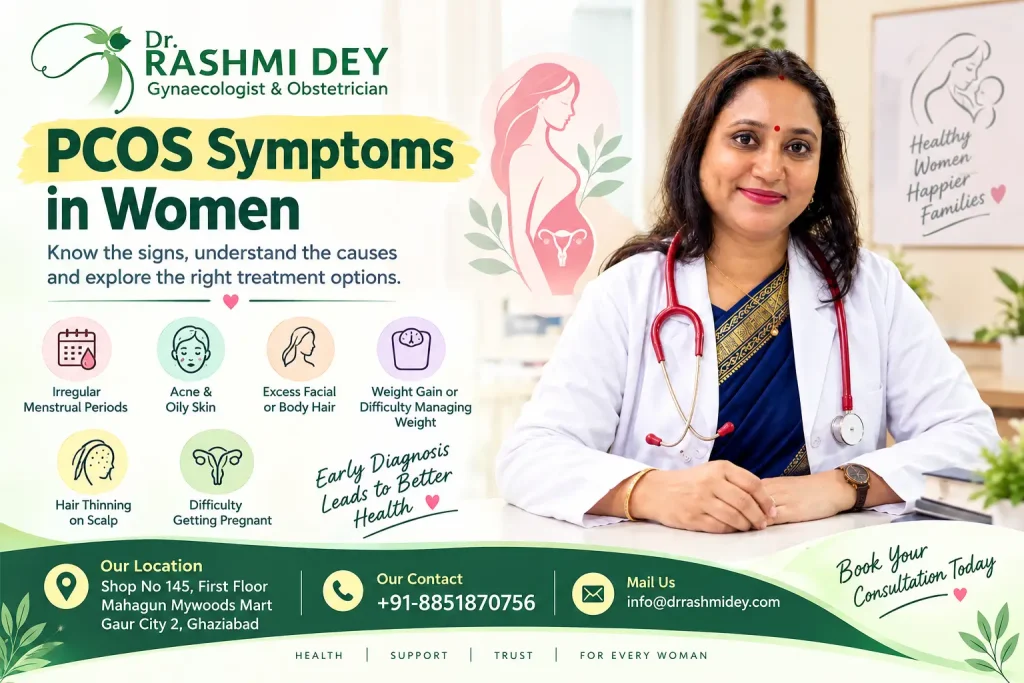
PCOS Symptoms in Women: Causes, Diagnosis and Treatment Options
Polycystic Ovary Syndrome (PCOS) is a common hormonal condition that can affect menstrual cycles, skin health, metabolism, and fertility. Many women experience irregular periods, persistent acne, unwanted facial hair, or difficulty conceiving without immediately realizing that these changes may be related to a hormonal imbalance. Early evaluation can help identify the cause of these concerns and guide appropriate treatment. Understanding PCOS symptoms is an important first step towards managing your reproductive and overall health. Whether you are experiencing changes in your menstrual cycle or planning a pregnancy, knowing when to consult a gynaecologist can help you make informed decisions about your care.
What Is PCOS?
Polycystic Ovary Syndrome is a hormonal and metabolic condition that affects the functioning of the ovaries. It may interfere with ovulation, which is the process of releasing an egg during the menstrual cycle. Some women with PCOS have higher-than-normal androgen levels, while others experience irregular periods or changes in ovarian appearance on ultrasound.
PCOS can affect women differently. Some experience noticeable physical symptoms, while others may discover the condition during an evaluation for irregular periods or difficulty getting pregnant. Having ovarian cysts is not necessary for a PCOS diagnosis, and an ultrasound alone cannot confirm the condition.
According to the World Health Organization, PCOS affects an estimated 10–13% of women of reproductive age worldwide. Early diagnosis and ongoing management can help address symptoms and reduce certain long-term health risks.
Common PCOS Signs and Symptoms in Women
The symptoms of PCOS can vary depending on hormonal changes, age, and individual health factors. Recognising persistent changes can help women seek timely medical advice.
1. Irregular Menstrual Periods
Irregular periods are among the most common signs associated with PCOS. Some women have long gaps between periods, while others experience infrequent or absent menstruation. These changes may occur when ovulation does not happen regularly.
If your menstrual cycle frequently becomes unpredictable or you miss periods for an extended time, consult a gynaecologist to identify the underlying cause.
2. Acne and Oily Skin
Hormonal changes can increase oil production in the skin, contributing to persistent acne. Breakouts may appear on the face, chest, shoulders, or back and may continue beyond adolescence.
Although acne can have several causes, persistent breakouts accompanied by irregular periods or increased facial hair may warrant a hormonal assessment.
3. Excess Facial or Body Hair
Some women develop thicker, darker hair on the chin, upper lip, chest, abdomen, or other areas. This condition is known as hirsutism and may be associated with elevated androgen levels.
Unwanted hair growth does not automatically mean that you have PCOS. A medical assessment can help determine whether hormonal changes or another condition is responsible.
4. Weight Gain or Difficulty Managing Weight
Some women with PCOS experience weight gain, particularly around the waist, or find it difficult to lose weight. Insulin resistance may contribute to metabolic changes in some individuals.
However, PCOS can also occur in women who have a healthy body weight. Weight alone cannot confirm or rule out the condition.
5. Hair Thinning on the Scalp
Hormonal changes may contribute to thinning hair, particularly around the crown or parting of the scalp. Hair loss can also result from thyroid disorders, nutritional deficiencies, stress, and other conditions, so proper evaluation is important.
6. Difficulty Getting Pregnant
PCOS can interfere with regular ovulation, making conception more difficult for some women. However, many women with PCOS become pregnant naturally, while others may benefit from fertility treatment.
Recognising the PCOS signs and symptoms early can help women understand their reproductive health and discuss suitable options with a qualified gynaecologist.
What Causes PCOS?
The exact cause of PCOS is not fully understood. Research suggests that several factors may contribute to its development, including genetics, hormonal imbalances, and insulin resistance.
Hormonal Imbalance
Higher androgen levels can interfere with normal ovulation and contribute to acne, unwanted facial hair, and scalp hair thinning.
Insulin Resistance
Insulin helps regulate blood glucose levels. When the body does not respond to insulin effectively, it may produce more insulin to compensate. In some women, higher insulin levels can contribute to increased androgen production and irregular ovulation.
Genetic Factors
PCOS may run in families. Having a close relative with the condition may increase the likelihood of developing it, although family history does not guarantee that someone will have PCOS.
Lifestyle factors can influence metabolic health and symptom management, but PCOS is not simply caused by poor lifestyle choices. Women should receive individualised advice rather than blame themselves for developing the condition.
How Is PCOS Diagnosed?
There is no single test that confirms every case of PCOS. A gynaecologist usually considers medical history, symptoms, physical examination findings, and appropriate investigations.
Depending on your situation, the evaluation may include:
- Medical history: Questions about menstrual cycles, acne, hair growth, weight changes, and pregnancy plans.
- Blood tests: Hormone testing and other investigations to assess possible causes of symptoms.
- Metabolic screening: Blood glucose and cholesterol assessments when indicated.
- Pelvic ultrasound: An ultrasound may help assess ovarian appearance when clinically appropriate.
Doctors also consider other conditions that can cause similar symptoms, including thyroid disorders and elevated prolactin levels.
If you are experiencing symptoms of PCOS, consulting a gynaecologist in Gaur City 2 or Noida Extension can help you understand which investigations are appropriate for your individual circumstances. An accurate diagnosis is important because treatment should address your specific symptoms and health goals.
PCOS Symptoms and Treatment Options
There is currently no permanent cure for PCOS, but several treatment approaches can help manage symptoms and reduce associated health risks. The right approach depends on your menstrual health, metabolic factors, symptom severity, and whether you are planning a pregnancy.
1. Lifestyle and Nutrition Management
Regular physical activity, balanced meals, adequate sleep, and sustainable daily habits can support overall metabolic health. For women who are overweight, an individualised weight-management plan may improve some symptoms. However, weight loss is not necessary or appropriate for every woman with PCOS.
2. Medication for Irregular Periods
A doctor may recommend hormonal medication, including combined oral contraceptive pills when suitable, to regulate menstrual bleeding and improve certain androgen-related symptoms.
Women who have prolonged gaps between periods should seek medical advice because appropriate treatment may be needed to protect the uterine lining.
3. Treatment for Acne and Excess Hair Growth
Depending on the symptoms, treatment may include prescribed hormonal medication, dermatological treatments, or other medicines that reduce unwanted hair growth. Some medications are unsuitable during pregnancy, so discuss contraception and pregnancy plans with your doctor before starting treatment.
4. Fertility Treatment
For women who want to conceive, treatment may focus on improving ovulation. Depending on the clinical assessment, a specialist may recommend ovulation-induction medication or other fertility treatments.
A PCOS diagnosis does not mean that pregnancy is impossible. Many women can achieve pregnancy with appropriate care.
5. Long-Term Health Monitoring
PCOS may be associated with an increased risk of insulin resistance, type 2 diabetes, abnormal cholesterol levels, and other metabolic concerns. Your doctor may recommend periodic monitoring based on your individual risk factors.
A personalised plan for PCOS symptoms and treatment can help address current concerns while supporting long-term reproductive and metabolic health.
When Should You Consult a Gynaecologist?
Consider arranging a medical consultation if you experience:
- Frequently irregular or absent periods.
- Persistent acne accompanied by menstrual changes.
- New or increasing facial or body hair.
- Unexplained scalp hair thinning.
- Difficulty conceiving or concerns about ovulation.
- Darkened, thickened skin around the neck or underarms, particularly alongside other symptoms.
Do not assume that every menstrual or skin change is caused by PCOS. Sudden, rapid development of excessive hair growth, a deepening voice, or other significant hormonal changes requires prompt medical assessment. Seek urgent care for severe pelvic pain or unusually heavy bleeding accompanied by dizziness or fainting.
Consult Dr. Rashmi Dey for Women’s Health Guidance
If you are concerned about the symptoms of PCOS, a professional evaluation can help you understand the possible causes and explore appropriate management options.
Dr. Rashmi Dey, Consultant Gynaecologist and Obstetrician, provides women’s healthcare services at Mahagun Mywoods Mart, Gaur City 2, Ghaziabad. Women from Gaur City 2, Noida Extension, and nearby areas of Ghaziabad can enquire about a consultation for menstrual irregularities, hormonal concerns, fertility questions, and other gynaecological issues.
Rather than relying on self-diagnosis or unverified remedies, discuss your symptoms and health goals with a qualified medical professional. Early assessment and personalised follow-up can help you manage PCOS more confidently.
Book a consultation with Dr. Rashmi Dey to discuss your concerns and determine the next steps for your women’s healthcare needs.
Website: https://drrashmidey.com
Frequently Asked Questions
1. What are the most common PCOS symptoms in women?
Common symptoms include irregular periods, acne, excess facial or body hair, scalp hair thinning, and difficulty getting pregnant. Some women also experience weight changes or signs of insulin resistance. Symptoms vary from person to person, and a medical evaluation is needed for diagnosis.
2. Can PCOS occur in women with a normal body weight?
Yes. PCOS can affect women of all body sizes. Although some women experience weight gain or insulin resistance, body weight alone cannot determine whether someone has the condition.
3. Can PCOS be treated permanently?
There is currently no permanent cure for PCOS, but symptoms can often be managed with appropriate medication, lifestyle support, and regular medical follow-up. Treatment plans may change according to a woman’s symptoms and pregnancy goals.
4. Does PCOS always cause infertility?
No. PCOS may interfere with regular ovulation, but it does not mean that a woman cannot conceive. Many women with PCOS become pregnant naturally or with medical assistance when needed.
5. When should I consult a gynaecologist for PCOS in Gaur City 2?
Consider consulting a gynaecologist if you experience persistent irregular periods, excessive hair growth, ongoing acne with menstrual changes, or difficulty conceiving. Dr. Rashmi Dey clinic in Gaur City 2, Ghaziabad, is an option to enquire about for a women’s health consultation.