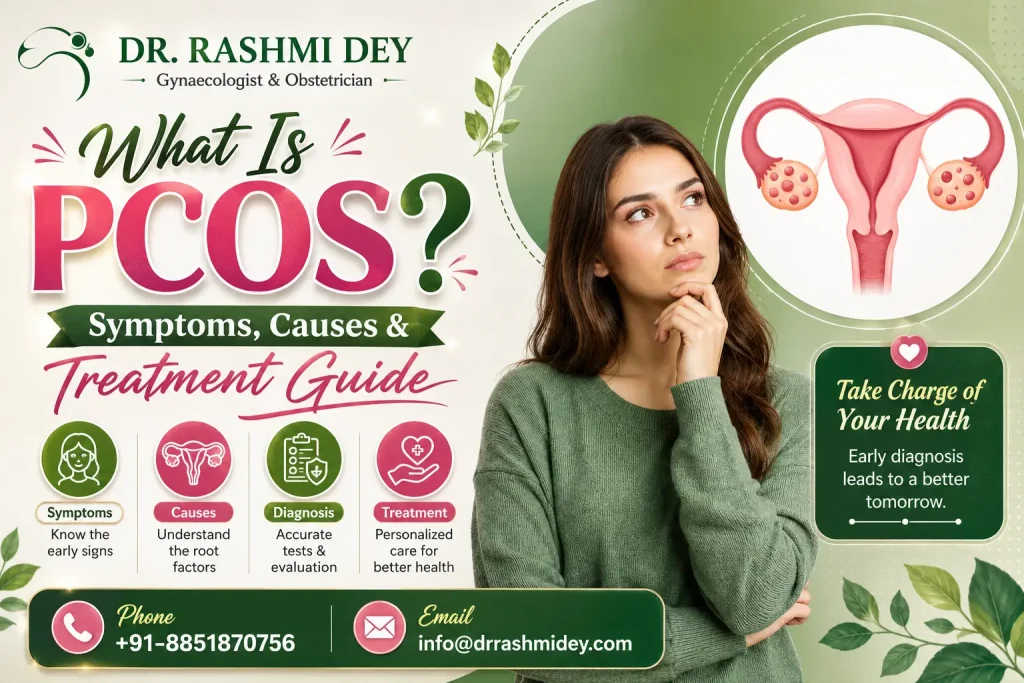
What Is PCOS? Symptoms, Causes, Treatment and Pregnancy
Polycystic Ovary Syndrome (PCOS) is a common hormonal condition that can affect women during their reproductive years. It may influence menstrual cycles, ovulation, skin, hair growth, weight, and fertility. Because PCOS symptoms can vary significantly from one woman to another, some women may experience several noticeable changes while others may have only mild symptoms.
Although the condition can be concerning, appropriate medical evaluation and long-term management can help many women manage their symptoms and maintain their overall reproductive health. Understanding the condition, recognizing changes in the menstrual cycle, and seeking professional advice early can make a meaningful difference.
For women experiencing irregular periods, unexplained changes in their skin or hair, difficulty with ovulation, or concerns about fertility, consulting a qualified gynaecologist can help identify the underlying cause and guide appropriate care.
What Is PCOS?
What is PCOS? PCOS, or Polycystic Ovary Syndrome, is a hormonal and metabolic condition associated with irregular ovulation, hormonal imbalance and, in some women, multiple small follicles in the ovaries.
Despite its name, having ovarian cysts is not necessary for a woman to have PCOS. Diagnosis is generally based on a combination of medical history, symptoms, examination and appropriate investigations.
PCOS can affect women differently. Some may primarily experience irregular periods, while others may have acne, increased facial or body hair, weight-related concerns or difficulty becoming pregnant.
Early assessment can help distinguish PCOS from other conditions that may cause similar symptoms.
What Are the Common PCOS Symptoms?
The PCOS symptoms can differ from person to person. Some common symptoms include:
- Irregular or unpredictable menstrual periods
- Periods that occur less frequently than usual
- Difficulty with ovulation
- Excess facial or body hair
- Persistent acne or oily skin
- Hair thinning or hair loss from the scalp
- Unexplained or difficult-to-manage weight changes
- Darkened skin in certain body areas
- Difficulty conceiving
- Changes associated with insulin resistance
Having one or more of these symptoms does not automatically mean that a woman has PCOS. A proper medical evaluation is important because several other hormonal or reproductive conditions can produce similar symptoms.
What Are the First Signs of PCOS?
One of the earliest noticeable changes may be irregular menstrual cycles. A woman may start experiencing periods that are unusually delayed, occur less frequently, or become unpredictable.
Other early changes can include persistent acne, increased facial hair, scalp hair thinning or unexpected changes in weight.
However, there is no single symptom that confirms PCOS. If menstrual irregularities or other hormonal changes continue, it is better to consult a gynaecologist instead of trying to diagnose the condition independently.
What Causes PCOS?
The exact cause is not completely understood. However, several factors may contribute to its development.
The commonly discussed PCOS causes include:
Hormonal Imbalance
Changes in reproductive hormones can interfere with normal ovulation and menstrual cycles.
Insulin Resistance
Some women with PCOS have insulin resistance, meaning the body does not respond effectively to insulin. This can contribute to increased insulin levels and hormonal changes.
Genetics
PCOS can sometimes occur more frequently among close family members, suggesting that genetic factors may play a role.
Lifestyle and Metabolic Factors
Lifestyle factors can influence metabolic health and may affect the severity of some symptoms. However, PCOS should not be viewed simply as a result of lifestyle choices or body weight.
Because multiple factors may be involved, treatment should be individualized rather than based on a single presumed cause.
PCOS Treatment: What Are the Options?
There is no single treatment that works for every woman. PCOS treatment depends on symptoms, age, reproductive goals and overall health.
Depending on the individual situation, management may include:
- Healthy and sustainable lifestyle changes
- Regular physical activity
- Nutritionally balanced eating habits
- Medical treatment for menstrual irregularities
- Treatment for acne or unwanted hair growth
- Management of insulin resistance when appropriate
- Ovulation-related treatment for women trying to conceive
- Regular monitoring of metabolic and reproductive health
The goal is not simply to manage one symptom but to address the woman’s overall health and reproductive needs.
How to Cure PCOS Permanently?
A common question is “how to cure PCOS permanently?”
PCOS is generally considered a long-term condition rather than something that can be permanently cured with one medicine or treatment. However, its symptoms can often be effectively managed.
Some women experience significant improvement in menstrual regularity, metabolic health and other symptoms through appropriate lifestyle changes and medical treatment.
The right approach depends on the individual. Therefore, instead of relying on claims of a permanent cure, women should focus on proper diagnosis, symptom management and regular medical follow-up.
Can I Get Pregnant with PCOS?
Yes, many women with PCOS can become pregnant.
PCOS can sometimes affect fertility because irregular ovulation may make it more difficult to identify fertile days or achieve pregnancy naturally. However, having PCOS does not mean that pregnancy is impossible.
If pregnancy is desired, a gynaecologist can assess ovulation, menstrual history and other fertility factors. Depending on the situation, lifestyle management, ovulation-inducing medicines or other fertility treatments may be considered.
Women with PCOS who are planning pregnancy should ideally discuss their reproductive health with a qualified doctor.
What Is PCOS Problem and When Should You See a Doctor?
If you are wondering “what is PCOS problem?”, it is important to understand that PCOS can involve several aspects of health, including menstrual cycles, ovulation, hormones, metabolism and fertility.
Consider consulting a gynaecologist if you experience:
- Persistently irregular periods
- Very infrequent periods
- Excessive facial or body hair
- Persistent acne
- Unexplained hair thinning
- Difficulty becoming pregnant
- Significant or unexplained menstrual changes
Early assessment can help identify the cause of these symptoms and determine whether PCOS or another condition may be responsible.
PCOS and Women’s Health in Gaur City 2
Women living in Gaur City 2, Greater Noida West, Noida Extension and nearby Ghaziabad can seek professional guidance when experiencing menstrual irregularities, hormonal concerns or fertility-related issues.
Dr. Rashmi Dey, a dedicated Consultant Gynaecologist & Obstetrician, provides women’s healthcare and reproductive health guidance at her clinic in Gaur City 2.
A personalized consultation can help women understand their symptoms, undergo appropriate evaluation and discuss suitable management options based on their individual health and reproductive goals.
Frequently Asked Questions About PCOS
What causes PCOS?
The exact cause is not completely known. Hormonal changes, insulin resistance, genetic factors and other metabolic factors may contribute to its development.
What are the first signs of PCOS?
Irregular or unpredictable periods are among the commonly noticed early signs. Acne, increased facial hair, scalp hair thinning and weight-related changes may also occur.
Can I get pregnant with PCOS?
Yes. Many women with PCOS can become pregnant. Irregular ovulation can make conception more difficult for some women, but appropriate medical management can help improve fertility outcomes.
What is PCOS problem?
PCOS is a hormonal and metabolic condition that can affect ovulation, menstrual cycles, skin, hair, metabolism and fertility. Symptoms vary from woman to woman.
How to cure PCOS permanently?
There is no guaranteed permanent cure for PCOS. However, symptoms and associated health risks can often be effectively managed with individualized lifestyle measures, medical treatment and regular follow-up.
Consult Dr. Rashmi Dey for PCOS Care in Gaur City 2
If you are experiencing irregular periods, hormonal symptoms, acne, unwanted hair growth or concerns related to fertility, professional evaluation can help you understand the underlying issue.
Dr. Rashmi Dey
Consultant Gynaecologist & Obstetrician
Clinic: Shop No 145, First Floor, Mahagun Mywoods Mart, Gaur City 2, Ghaziabad
Phone: +91-8851870756
Email: info@drrashmidey.com
Timely medical guidance can help you understand your symptoms and choose an appropriate approach to managing PCOS and your reproductive health.