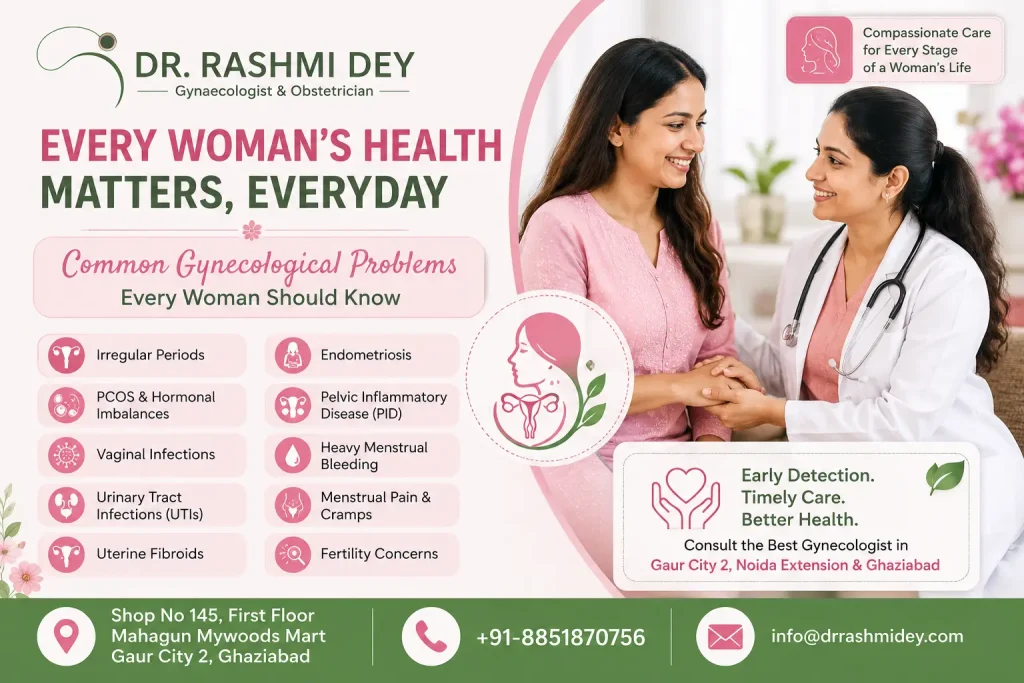
Common Gynecological Problems Every Woman Should Know
Women’s health needs can change at different stages of life, from adolescence and the reproductive years to pregnancy and menopause. Many women experience symptoms such as irregular periods, pelvic pain, unusual vaginal discharge, itching, or hormonal changes but may delay seeking medical advice. Understanding common gynecological problems can help women recognise warning signs early and seek timely care.
Regular gynecological checkups are important for maintaining reproductive and overall health. For women living in Gaur City 2, Noida Extension and Ghaziabad, timely consultation with a qualified gynecologist can help with early diagnosis, proper treatment and better management of many women’s health concerns.

1. Irregular Periods
Irregular periods are among the most common gynecological problems experienced by women. A menstrual cycle may become irregular due to stress, weight changes, hormonal imbalance, thyroid disorders, polycystic ovary syndrome (PCOS), pregnancy or other health conditions.
Some changes in the menstrual cycle may be temporary, but frequent irregularity should not be ignored. Symptoms may include missed periods, unusually heavy bleeding, very light periods or bleeding between periods. A gynecologist can help identify the underlying cause and recommend suitable treatment.
2. Polycystic Ovary Syndrome (PCOS)
PCOS is a hormonal condition that can affect women during their reproductive years. Common symptoms may include irregular or missed periods, acne, excessive hair growth, weight changes and difficulty becoming pregnant.
Women with PCOS may also have an increased risk of certain metabolic problems. Early diagnosis and proper management through lifestyle changes, medical treatment and regular follow-ups can help manage symptoms effectively. PCOS is one of the common female reproductive problems that should be addressed with personalised medical care.
3. Vaginal Infections
Vaginal infections are another common concern affecting women. They may occur because of bacterial infections, fungal infections or sexually transmitted infections. Some women may experience itching, burning, unusual discharge, unpleasant odour or discomfort.
Changes in vaginal discharge can sometimes be normal, but a noticeable change in colour, smell or consistency may need medical evaluation. Avoid self-medication, as different infections require different treatments. A proper diagnosis can help ensure that the correct treatment is provided.
4. Urinary Tract Infections (UTIs)
UTIs are common in women and may cause a burning sensation during urination, frequent urination, lower abdominal discomfort or cloudy urine. Some women may experience recurrent infections.
Drinking enough water and maintaining proper hygiene may help reduce the risk of infection. However, persistent or recurring symptoms should be evaluated by a healthcare professional. Untreated infections may sometimes lead to more serious complications.
5. Endometriosis
Endometriosis is a condition in which tissue similar to the lining of the uterus grows outside the uterus. It can cause severe menstrual cramps, pelvic pain, pain during intercourse and, in some cases, fertility problems.
The symptoms can vary significantly from woman to woman. Some women may have mild symptoms, while others experience severe pain that affects their daily lives. Early consultation can help in developing an appropriate treatment plan based on the severity of symptoms and individual needs.
6. Uterine Fibroids
Uterine fibroids are non-cancerous growths that develop in or around the uterus. Many women may have fibroids without experiencing noticeable symptoms. However, larger fibroids can cause heavy menstrual bleeding, pelvic pressure, frequent urination or abdominal discomfort.
Treatment depends on factors such as the size and location of the fibroids, the severity of symptoms and future pregnancy plans. Regular gynecological evaluation can help determine the most suitable management approach.
7. Pelvic Inflammatory Disease (PID)
Pelvic inflammatory disease is an infection affecting the female reproductive organs. It may occur when bacteria spread from the vagina to the uterus, fallopian tubes or ovaries.
Possible symptoms include lower abdominal pain, unusual vaginal discharge, fever and pain during intercourse. Early treatment is important because untreated PID may lead to long-term complications, including fertility problems.
8. Menstrual Pain and Heavy Bleeding
Mild cramps during periods are common, but severe or persistent menstrual pain should be discussed with a gynecologist. Heavy menstrual bleeding that affects daily activities or requires frequent changing of sanitary products may also need medical attention.
These symptoms can sometimes be associated with conditions such as fibroids, endometriosis, hormonal changes or other reproductive health concerns. Identifying the underlying cause is essential for effective treatment.
Common Symptoms of Gynecological Problems
The symptoms of gynecological problems can vary depending on the condition. Women should pay attention to persistent or unusual changes in their bodies, including:
- Irregular, missed or unusually painful periods
- Heavy or prolonged menstrual bleeding
- Unusual vaginal discharge or odour
- Persistent itching or irritation
- Pelvic or lower abdominal pain
- Pain during intercourse
- Frequent or painful urination
- Bleeding between periods
- Difficulty getting pregnant
- Unexplained changes in menstrual patterns
Not every symptom indicates a serious condition, but early medical advice can help identify the cause and prevent complications.
Also Read: 9 Months Pregnant Symptoms & Delivery Signs
When Should You See a Gynecologist?
Many women wait until symptoms become severe before consulting a doctor. However, regular check-ups can help detect potential problems earlier. You should consider seeing a gynecologist if you have persistent menstrual irregularities, severe pelvic pain, unusual bleeding, repeated infections or other ongoing symptoms.
Women planning a pregnancy should also consider a pre-pregnancy consultation. Regular gynecological care is important not only when problems occur but also for preventive health and long-term well-being.
Importance of Regular Women’s Health Check-Ups
Regular check-ups can help monitor menstrual health, hormonal concerns, reproductive health and other common women’s health problems. Depending on your age, symptoms and medical history, your doctor may recommend appropriate screenings and tests.
For women in Gaur City 2, Noida Extension and Ghaziabad, access to timely gynecological care can make it easier to discuss health concerns without delay. Open communication with your doctor is important, and women should feel comfortable discussing any symptoms that affect their quality of life.
Conclusion
Understanding common gynecological problems can help women take a more proactive approach to their health. Conditions such as irregular periods, PCOS, vaginal infections, UTIs, fibroids and endometriosis can often be managed more effectively with early diagnosis and proper medical guidance.
If you are experiencing persistent symptoms or have concerns about your reproductive health, seeking advice from a qualified gynecologist is important. Women in Gaur City 2, Noida Extension and Ghaziabad can benefit from timely consultation, regular check-ups and personalised care to manage gynecological problems in women and maintain better reproductive health. Early attention to symptoms can make a positive difference in managing common female reproductive problems and supporting long-term well-being.
Read Also Blogs:
Pregnancy Ultrasound Scan: Types, Timing & Importance
Infertility in Women: Causes, Symptoms, Tests & Treatment
9th Month Pregnancy Pain: How to Identify Labor Signs
High Risk Pregnancy: Causes, Symptoms & Care Guide