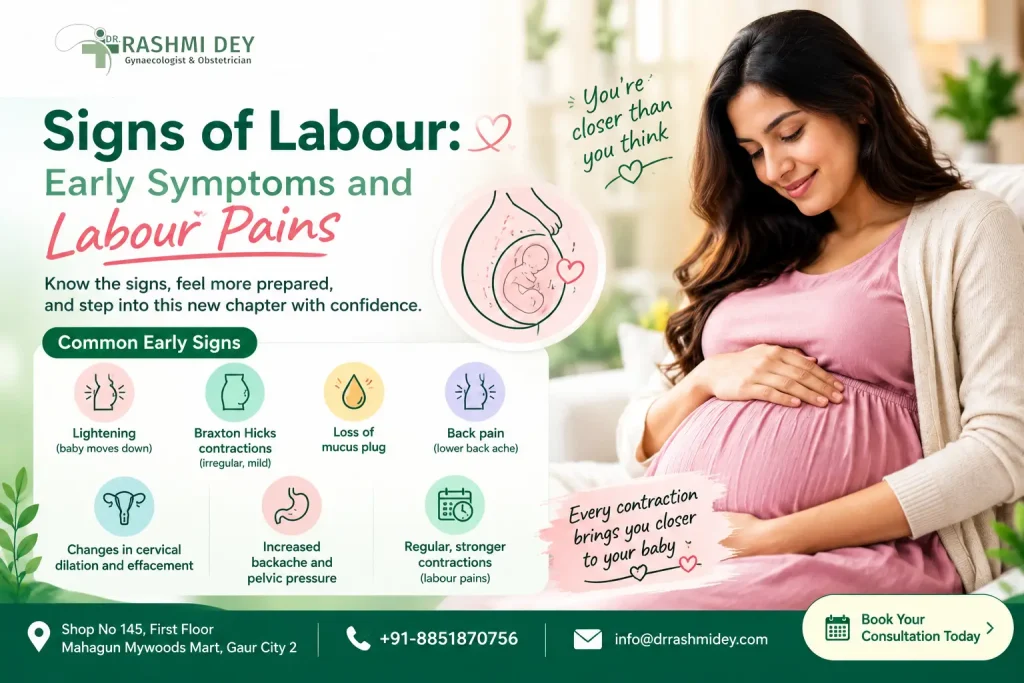
Signs of Labour: How to Know When Your Baby Is Coming
The final weeks of pregnancy can bring a mixture of excitement, anticipation, and nervousness. As your due date approaches, you may start noticing changes in your body that indicate your baby is getting ready to arrive. However, it is not always easy to distinguish between normal late-pregnancy discomfort, false labour, and the actual beginning of labour. Understanding the signs of labour in pregnancy can help you recognise when childbirth may be approaching and when it is time to contact your doctor or visit the hospital. Every pregnancy is different, and labour may begin gradually or progress more quickly than expected. Knowing what to look for can help you feel more prepared for this important stage of motherhood.
Also Read: 9 Months Pregnant Symptoms & Delivery Signs
What Is Labour During Pregnancy?
Labour is the natural process through which the uterus contracts, the cervix softens and opens, and the baby moves through the birth canal for delivery. It usually happens around the end of pregnancy, although labour can begin earlier in some cases.
Labour generally progresses through three stages:
- First stage: The cervix softens, thins, and gradually opens to allow the baby to pass through.
- Second stage: The cervix is fully dilated, and the baby is delivered.
- Third stage: The placenta is delivered after the baby is born.
Recognising the early symptoms can help you prepare for labour and understand when you need professional medical guidance.
7 Early Signs of Labour You Should Know
Several physical changes may occur as your body prepares for childbirth. Some signs can appear days before labour begins, while others indicate that labour may already be underway.
1. Regular and Increasing Labour Pains
One of the most important signs of labour pains is the development of regular uterine contractions. These contractions occur when the muscles of the uterus tighten and relax to help the cervix open.
Early contractions may feel like menstrual cramps, lower abdominal discomfort, or a dull ache in the lower back. As labour progresses, contractions generally become stronger, longer, and more frequent.
You may notice that:
- Contractions follow a more regular pattern.
- The time between contractions gradually becomes shorter.
- The pain becomes more intense over time.
- Contractions continue despite resting or changing position.
Unlike false labour contractions, true labour contractions usually become progressively stronger and more consistent. However, the pattern can vary, particularly during early labour.
Contact your maternity care provider for advice about when to go to the hospital, based on your pregnancy and birth plan.
2. The Show Sign of Labour
The show sign of labour refers to the release of a small amount of mucus from the cervix. During pregnancy, mucus forms a plug that helps protect the uterus from infection. As the cervix begins to soften and open, this mucus may come away.
The mucus may appear:
- Clear or whitish
- Pink or slightly brown
- Thick, sticky, or jelly-like
- Streaked with a small amount of blood
Losing the mucus plug can indicate that your body is preparing for labour, but it does not necessarily mean delivery will happen immediately. Labour may begin soon afterward, or it may still be several days away.
Important: Heavy bleeding, bright-red bleeding similar to a period, or bleeding accompanied by severe pain requires urgent medical assessment. Do not assume that heavy bleeding is simply a normal show.
3. Your Water Breaking
Another possible sign of labour is the rupture of the amniotic sac, commonly known as your water breaking. The fluid surrounding your baby may come out as a sudden gush or a slow, continuous trickle.
Amniotic fluid is usually clear or pale in colour. It can sometimes be difficult to distinguish from urine, especially during the final weeks of pregnancy.
If you suspect that your water has broken:
- Contact your maternity care provider promptly, even if contractions have not started.
- Note the time when the fluid began leaking.
- Observe its colour and smell.
- Use a sanitary pad if needed, rather than inserting anything into the vagina.
Green or brown fluid, significant bleeding, fever, or a noticeable reduction in your baby’s movements requires urgent assessment. Do not wait for contractions to become regular before seeking advice.
4. Lower Back Pain and Pelvic Pressure
As your baby moves lower into the pelvis, you may experience increased pressure in the lower abdomen, pelvis, or back. Some women experience persistent lower back discomfort, while others notice cramping that comes and goes.
These symptoms may be related to the baby’s position or the body’s preparation for labour.
However, back pain and pelvic pressure alone do not confirm that labour has started. If the discomfort occurs alongside regular contractions, fluid leakage, bleeding, or other concerning symptoms, contact your healthcare provider.
5. The Baby Moving Lower Into the Pelvis
Towards the end of pregnancy, your baby may settle deeper into the pelvis. This is often called lightening or engagement.
You may notice that:
- Breathing feels slightly easier because there is less pressure on the diaphragm.
- There is more pressure on the bladder.
- You need to urinate more frequently.
- Walking becomes uncomfortable because of pelvic pressure.
This change may happen days or weeks before labour, particularly during a first pregnancy. In subsequent pregnancies, the baby may not move lower until labour begins.
Although this is a common late-pregnancy change, it does not reliably predict the exact day your baby will arrive.
6. Changes in Vaginal Discharge
Vaginal discharge may increase as pregnancy approaches its final weeks. You may notice thicker mucus or discharge that looks different from what you experienced earlier in pregnancy.
An increase in mucus-like discharge may occur as the cervix begins to change in preparation for labour.
However, unusual discharge accompanied by itching, a strong unpleasant smell, fever, or discomfort should be assessed by a healthcare professional. Watery leakage should also be checked promptly because it may indicate that your water has broken.
7. Loose Motions, Nausea, or Abdominal Cramps
Some women experience nausea, loose stools, or abdominal cramps before or during early labour. Hormonal changes and the body’s preparation for childbirth may contribute to these symptoms.
However, digestive symptoms are not reliable signs that labour is beginning. They may also result from food-related illness, dehydration, or other conditions.
Drink fluids regularly if you can, and seek medical advice if you have persistent vomiting, severe diarrhoea, fever, significant abdominal pain, or difficulty keeping fluids down.
True Labour vs False Labour: How to Tell the Difference
Towards the end of pregnancy, you may experience Braxton Hicks contractions, commonly known as practice contractions. These can feel uncomfortable and may sometimes be difficult to distinguish from early labour.
The following comparison can help you understand the usual differences.
| Feature | True labour | False labour |
|---|---|---|
| Contraction pattern | Usually becomes regular and progressively closer together | Often irregular and unpredictable |
| Intensity | Generally increases over time | Often remains similar or eases |
| Duration | Usually becomes longer as labour progresses | Often varies |
| Effect of movement | Usually continues despite changing position | May settle with rest or a change of activity |
| Cervical changes | The cervix progressively opens and thins | Usually does not cause progressive cervical dilation |
These are general patterns, not a definitive test. Early labour can be irregular, and only a clinical assessment can determine whether the cervix is changing.
If you are unsure whether you are experiencing true labour, contact your maternity care provider rather than waiting for the symptoms to become severe.
When Should You Go to the Hospital?
Knowing when to seek medical attention is an important part of preparing for delivery.
Contact your doctor or maternity unit when contractions become regular and progressively stronger, following the instructions provided in your birth plan. The appropriate timing depends on factors such as whether this is your first baby, how quickly your previous labour progressed, your distance from the hospital, and any pregnancy complications.
Seek urgent medical assessment if you experience any of the following:
- Your water breaks or you suspect amniotic fluid is leaking.
- You have heavy or bright-red vaginal bleeding.
- Your baby is moving less than usual or you notice a significant change in the usual movement pattern.
- You develop severe or persistent abdominal pain.
- You experience a severe headache, visual disturbances, or sudden significant swelling.
- You have a strong urge to push or feel that the baby is coming.
- You develop signs of labour before 37 completed weeks of pregnancy.
If you are less than 37 weeks pregnant and notice regular contractions, pelvic pressure, unusual backache, fluid leakage, or bleeding, contact your maternity care provider immediately. These may be signs of preterm labour.
Do not wait for contractions to reach a particular interval if you have a warning sign or have been advised to come in earlier.
How to Prepare for Labour and Delivery
Preparing in advance can help reduce anxiety and make your hospital visit more organised.
Here are some practical steps to consider:
1. Keep your hospital bag ready: Pack your medical records, identification, comfortable clothing, toiletries, baby clothes, and other essentials recommended by your hospital.
2. Know your route to the hospital: Plan how you will travel, especially if labour begins at night or during busy traffic.
3. Learn to time contractions: Record when each contraction starts, how long it lasts, and the interval between contractions. This information can help your healthcare provider guide you.
4. Stay hydrated and rest when possible: During early labour, drink fluids as advised and conserve your energy. Follow any specific instructions given by your doctor.
5. Discuss your birth preferences: Talk to your obstetrician about pain relief, delivery options, and any concerns you may have. Your birth plan should remain flexible because the safest approach can change depending on your and your baby’s condition.
6. Arrange support: If possible, have a trusted family member or birth companion available to help you reach the hospital and provide emotional support.
Frequently Asked Questions About Signs of Labour
1. What are the earliest signs of labour?
Early signs may include menstrual-like cramps, lower backache, regular contractions, increased pelvic pressure, and the release of the mucus plug. These symptoms do not always mean that labour has started, so contact your maternity care provider if you are uncertain.
2. Does the show sign of labour mean delivery will happen within 24 hours?
Not necessarily. The mucus plug may come away hours or days before labour, and sometimes earlier. The show alone cannot predict exactly when your baby will be born.
3. How do real labour pains feel?
True labour pains often begin as cramping or tightening in the abdomen or lower back. They usually become stronger, longer, and more regular as labour progresses. The experience varies from woman to woman.
4. Can labour start without the water breaking?
Yes. Labour often begins with contractions while the amniotic sac remains intact. The water may break during labour or before contractions begin.
5. When should I contact my gynecologist during the final weeks of pregnancy?
Contact your gynecologist if you experience regular, increasing contractions, suspected water leakage, unusual bleeding, or any symptom that concerns you. Seek urgent assessment for reduced fetal movements, heavy bleeding, severe pain, or possible preterm labour.
Conclusion
Recognising the signs of labour pains, early signs of labour, and the show sign of labour can help you understand the changes your body experiences as childbirth approaches. Regular contractions, mucus discharge, lower backache, pelvic pressure, and water breaking are important signs to watch for, but every pregnancy progresses differently. Always contact your maternity care provider when you are unsure, and seek urgent medical attention for warning signs such as heavy bleeding, reduced baby movements, or suspected preterm labour.
For personalised pregnancy guidance, antenatal checkups, and delivery planning, consult Dr. Rashmi Dey, Best Gynecologist in gaur city 2. Visit https://drrashmidey.com to learn more about pregnancy care and gynaecological services and to arrange a consultation for your maternity care needs.