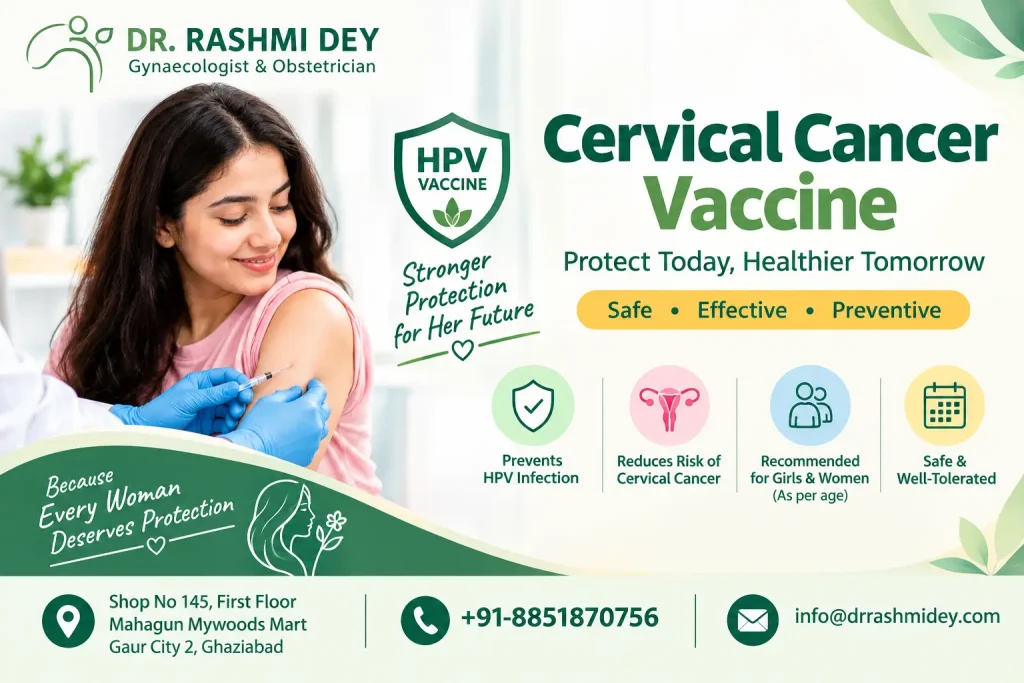
Cervical Cancer Vaccine: Benefits, Age, Schedule & Effectiveness
Cervical cancer is one of the major health concerns affecting women, but many cases can be prevented through timely vaccination and regular screening. The cervical cancer vaccine, commonly known as the HPV vaccine, helps protect against infection with certain types of human papillomavirus (HPV), a virus responsible for most cases of cervical cancer.
Understanding the right cervical cancer vaccine age, vaccination schedule, benefits, and effectiveness can help women and parents make informed decisions about HPV vaccination. Along with vaccination, regular cervical cancer screening and appropriate medical guidance remain important parts of women’s healthcare.
Also Read: Postmenopausal Bleeding: Causes, Symptoms & Treatment
What Is the Cervical Cancer Vaccine?
The cervical cancer vaccine is a vaccine designed to protect against specific types of HPV. HPV is a very common virus that can spread through intimate skin-to-skin contact. While many HPV infections clear naturally, persistent infection with certain high-risk HPV types can cause abnormal changes in cervical cells and may eventually lead to cervical cancer.
The HPV vaccine helps the immune system develop protection against the HPV types included in the vaccine. It is primarily recommended before exposure to HPV, which is why vaccination during adolescence is particularly important.
However, vaccination may also be appropriate for some older adolescents and adults depending on their age, vaccination history, and individual circumstances.
Also Read: IUI Treatment in Gaur City 2
What Are the Benefits of the Cervical Cancer Vaccine?
The main benefit of HPV vaccination is reducing the risk of infection with HPV types associated with cervical cancer and other HPV-related diseases.
Important benefits include:
- Helps prevent infection from vaccine-covered HPV types.
- Reduces the risk of cervical precancerous changes.
- Helps lower the future risk of HPV-related cervical cancer.
- Provides protection against certain other HPV-related cancers and conditions.
- Offers the greatest preventive benefit when given before exposure to HPV.
It is important to understand that the vaccine does not treat an existing HPV infection or existing cervical cancer. Therefore, vaccination should be considered a preventive measure rather than a treatment.
Cervical Cancer Vaccine Age: When Should It Be Given?
The recommended cervical cancer vaccine age is an important consideration for parents, adolescents, and adults.
HPV vaccination is routinely recommended for children around 11–12 years of age, although vaccination can begin earlier. The vaccine works best when administered before exposure to HPV.
Catch-up vaccination is recommended for people who were not adequately vaccinated earlier. In many guidelines, catch-up vaccination is recommended through age 26.
For adults between 27 and 45 years, vaccination may be considered after discussing potential benefits with a healthcare professional. The benefit may be lower in this age group because some individuals may already have been exposed to HPV.
Is There a Cervical Cancer Vaccine Age Limit?
There is no single answer that applies to everyone because vaccination recommendations can vary according to age, previous vaccination, health circumstances, and national guidelines.
For people older than the routinely recommended vaccination age, a doctor can assess whether HPV vaccination may provide meaningful protection. This is particularly relevant for adults who were not vaccinated during adolescence.
Therefore, if you are concerned about the cervical cancer vaccine age limit, it is best to discuss your vaccination history and individual circumstances with a qualified gynecologist.
Cervical Cancer Vaccine Schedule
The number of HPV vaccine doses depends primarily on the age at which vaccination begins and the person’s immune status.
For many adolescents who start vaccination before their 15th birthday, a two-dose schedule is commonly recommended, with the doses separated by several months.
People who begin vaccination at age 15 or older generally require a three-dose schedule. Individuals with certain immune conditions may also require three doses regardless of the age at which vaccination begins.
The exact timing should be confirmed with a healthcare professional because vaccination schedules can vary according to the vaccine used and applicable medical recommendations.
If a dose is delayed, vaccination generally does not need to be restarted; the healthcare provider can advise on completing the remaining doses.
How Effective Is the Cervical Cancer Vaccine?
The HPV vaccine is highly effective at preventing infection and precancerous changes caused by HPV types covered by the vaccine, particularly when administered before exposure to the virus.
Its effectiveness depends on several factors, including:
- Age at vaccination
- Previous exposure to HPV
- Number of doses received
- Completion of the recommended schedule
- HPV types covered by the vaccine
Vaccination significantly reduces risk, but it does not eliminate the possibility of cervical cancer completely. This is because not every HPV type is covered by every vaccine, and cervical cancer can have multiple contributing factors.
For this reason, vaccinated women should continue recommended cervical cancer screening according to their age and healthcare provider’s advice.
Are There Side Effects of the Cervical Cancer Vaccine?
Most people tolerate the HPV vaccine well. Like other vaccines, it can cause temporary side effects.
Common side effects may include:
- Pain or tenderness at the injection site
- Redness or swelling
- Mild fever
- Headache
- Tiredness
- Muscle or joint discomfort
These effects are usually mild and temporary. Some adolescents may feel dizzy or faint after receiving an injection, so sitting or lying down for a short period after vaccination may be recommended.
Serious allergic reactions are uncommon. Anyone who develops severe symptoms after vaccination should seek immediate medical attention.
Who Should Talk to a Doctor Before Vaccination?
Most eligible individuals can receive HPV vaccination safely, but medical advice is important in certain circumstances.
Speak with a healthcare professional if you:
- Have had a serious allergic reaction to a previous vaccine dose.
- Have a known allergy to a vaccine component.
- Are currently pregnant.
- Have a condition that affects the immune system.
- Are taking medicines that affect immune function.
- Have questions about previous HPV vaccination.
If vaccination is started during pregnancy, further doses are generally postponed until after pregnancy. A healthcare professional can provide individualized guidance.
Cervical Cancer Vaccine Does Not Replace Screening
One of the most important things to remember is that HPV vaccination and cervical cancer screening serve different purposes.
The vaccine helps prevent infection with certain HPV types, while screening helps identify cervical cell changes that may develop after HPV infection.
Women should therefore follow recommended screening guidelines even if they have received the HPV vaccine. Regular gynecological consultations can also help address reproductive health concerns and determine whether screening or additional preventive care is appropriate.
Cervical Cancer Vaccine in Gaur City 2
Women and parents looking for a cervical cancer vaccine Gaur City 2 can consult a qualified gynecologist to understand eligibility, vaccination schedules, previous vaccination history, and whether HPV vaccination is appropriate for their age.
A gynecologist can also provide guidance about cervical cancer screening, reproductive health, menstrual concerns, pregnancy care, and other women’s health needs.
Final Thoughts
The cervical cancer vaccine is an important preventive tool that can help protect against HPV infections associated with cervical cancer. Understanding the cervical cancer vaccine age, possible cervical cancer vaccine age limit, dosage schedule, benefits, and effectiveness can help families make informed healthcare decisions. Vaccination provides the greatest preventive benefit when given before HPV exposure, while adults who were not vaccinated earlier may benefit from discussing their individual situation with a healthcare professional. Remember that HPV vaccination does not replace cervical cancer screening, so appropriate screening should continue as recommended. If you are looking for guidance regarding HPV vaccination or women’s preventive healthcare, consulting the best gynecologist in Gaur City 2 can help you understand the appropriate options for your individual needs.
Read Also Blogs:
How to Stop Vomiting During Pregnancy
What Are the Symptoms of Pregnancy?
What Is Pelvic Pain? Symptoms, Causes & Treatment
Infertility in Women: Causes, Symptoms, Tests & Treatment